Introduction
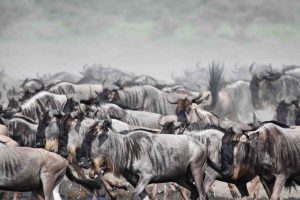
The Great Wildebeest Migration is one of the most spectacular natural events on Earth — a continuous, circular movement of over two million wildebeest, zebras, and gazelles across the vast Serengeti–Mara ecosystem in Tanzania and Kenya.
Often called “The Greatest Wildlife Show on the Planet,” this epic journey is driven by rainfall, fresh grazing, and survival instincts. Predators follow closely, river crossings test endurance, and new life is born along the way.
At Lions Kingdom Safaris, we specialize in strategically timed migration safaris, ensuring our guests are in the right place, at the right time, to witness the most dramatic moments of this unforgettable journey.
What Is the Great Wildebeest Migration?
The Great Migration is not a single event — it is a year-round cycle. Animals move continuously in search of fresh grass and water, guided by seasonal rains across northern Tanzania and southern Kenya.
The migration primarily takes place within:
Serengeti National Park (Tanzania)
Ngorongoro Conservation Area (Ndutu region)
Maasai Mara National Reserve (Kenya)
Unlike many wildlife phenomena, the migration has no fixed dates, making expert planning essential.
Why the Great Migration Happens
The migration exists for one reason: survival.
Rainfall determines grass growth
Grass determines grazing opportunities
Grazing determines movement
As the seasons change, the herds instinctively move in a circular route that has existed for thousands of years.
Month-by-Month Great Migration Guide
January – February: Calving Season (Southern Serengeti & Ndutu)
This is one of the most magical periods of the migration.
Over 500,000 wildebeest calves are born within a few weeks
Lush grasslands provide nourishment
Predator activity is intense
This season is ideal for:
📍 Best location: Ndutu Area & Southern Serengeti
March: Late Calving & Preparation for Movement
As rains continue, herds begin grouping and preparing to move.
📍 Best location: Southern Serengeti
April – May: Long Rains & Movement North
This period marks the start of long-distance movement.
While river crossings are not common yet, this season offers:
📍 Best location: Central Serengeti (Seronera)
June: Grumeti River Crossings Begin
By June, the herds gather in western Serengeti.
📍 Best location: Western Serengeti
July – August: Mara River Crossings (Peak Drama)
This is the most famous migration phase.
Massive herds cross the Mara River
Powerful currents and predators create unforgettable scenes
Peak safari demand worldwide
📍 Best location: Northern Serengeti
This is prime time for:
September – October: Northern Serengeti & Maasai Mara
Herds continue moving between Tanzania and Kenya.
Fewer crossings, but excellent wildlife density
Predator action remains strong
Less crowded than peak August
📍 Best location: Northern Serengeti
November: Return Journey South Begins
Short rains trigger the journey back toward Tanzania.
Herds move through eastern Serengeti
Dramatic skies and fresh grass
Quieter safari experience
📍 Best location: Eastern & Central Serengeti
December: Arrival in Southern Serengeti
By December, herds return to the southern plains.
Pregnant wildebeest prepare for calving
Excellent grazing conditions
Perfect balance of wildlife and scenery
📍 Best location: Southern Serengeti & Ndutu
Other Wildlife Highlights
In addition to the Big Five, you may encounter:
Hippos in the crater’s lakes and pools
Cheetahs hunting on open grasslands
Hyenas in large clans
Zebras, wildebeest, and gazelles
Flamingos at Lake Magadi
Bird lovers will enjoy over 500 bird species recorded in the conservation area.
Best Time to See the Great Migration
The best time depends on what you want to witness:
Calving & predators: January – February
River crossings: July – August
Fewer crowds: March, April, November
There is no wrong time — only different experiences.
Where to Stay During a Migration Safari
Lions Kingdom Safaris selects accommodations based on migration movement:
Mobile tented camps that move with the herds
Permanent lodges near key river crossings
Luxury camps in remote locations
Location is the single most important factor for migration success.
Why Book a Great Migration Safari with Lions Kingdom Safaris
We don’t guess — we plan strategically.
With Lions Kingdom Safaris, you receive:
Migration-focused itinerary planning
Real-time wildlife movement knowledge
Expert safari guides
Flexible and customized schedules
Ethical and responsible safari operations
Our goal is simple: maximize your chances of unforgettable sightings.
Combine the Great Migration with Other Experiences
Many guests combine migration safaris with:
Ngorongoro Crater for Big Five sightings
Tarangire National Park for elephants
Zanzibar for beach relaxation
This creates a perfectly balanced Tanzania adventure.